
Introduction
The hydraulic pump is one of the most important components in an excavator hydraulic system. It converts mechanical energy from the engine into hydraulic energy, providing high-pressure oil flow to operate essential functions such as boom lifting, arm movement, bucket operation, swing rotation, and travel movement. When an excavator hydraulic pump fails, the machine may experience slow operation, weak digging force, abnormal noise, overheating, or complete loss of hydraulic function.
Choosing the correct replacement hydraulic pump is not as simple as finding a pump with the same appearance or mounting dimensions. A suitable replacement must match the original pump in terms of displacement, pressure rating, control system, rotation direction, installation interface, and application requirements. An incorrect selection can lead to poor machine performance, increased wear, hydraulic system damage, and unnecessary maintenance costs.
This guide explains how to select the right replacement hydraulic pump for excavators, including important technical considerations, common pump types, brand compatibility, failure diagnosis, and purchasing recommendations.
1. Understand the Role of the Excavator Hydraulic Pump
Before selecting a replacement pump, it is important to understand the function of the hydraulic pump inside the excavator system.
Modern excavators mainly use variable displacement axial piston pumps because they can provide high pressure, high efficiency, and precise flow control. These pumps adjust their displacement according to the machine’s load requirements, allowing the excavator to achieve powerful digging performance while reducing energy consumption.
A typical excavator hydraulic system includes:
- Hydraulic pump
- Main control valve
- Hydraulic cylinders
- Hydraulic motors
- Hydraulic oil tank
- Filters
- Cooling system
- Electronic or hydraulic control units
The hydraulic pump supplies pressurized hydraulic oil to all actuators. If the pump cannot provide sufficient flow or pressure, the entire machine performance will decrease.
Common symptoms of hydraulic pump failure include:
- Slow actuator movement
- Weak digging force
- Excessive hydraulic oil temperature
- Unusual knocking or whining noise
- Excessive internal leakage
- Low system pressure
- Metal contamination in hydraulic oil
When these problems occur, replacing the hydraulic pump may be necessary.
2. Identify the Original Hydraulic Pump Model
The first and most important step is identifying the original pump model.
Never select a replacement pump only based on excavator brand or machine size. The same excavator model may use different hydraulic pump configurations depending on production year, market region, or optional equipment.
You should collect the following information:
2.1 Pump Nameplate Information
Most hydraulic pumps have a nameplate or identification label containing:
- Manufacturer name
- Model number
- Serial number
- Displacement
- Rotation direction
- Control type
For example:
- Bosch Rexroth A4VG180
- Bosch Rexroth A10VSO71
- Bosch Rexroth A11VO190
- Kawasaki K3V112
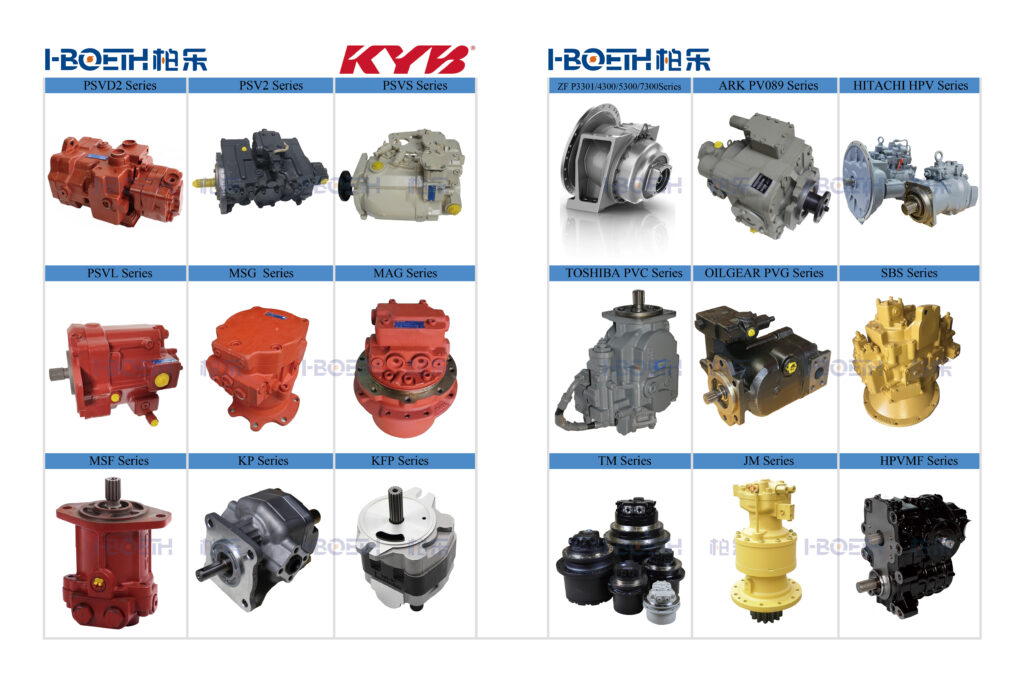
- KYB MAG series
- Hitachi HPV series
- Caterpillar hydraulic pump part number
The model number is the most reliable reference for selecting a replacement.
2.2 OEM Part Number
Excavator manufacturers usually assign their own part numbers.
Examples:
- Caterpillar hydraulic pump part numbers
- Komatsu pump assembly numbers
- Volvo hydraulic pump numbers
- Hitachi hydraulic pump part numbers
- Hyundai hydraulic pump numbers
A replacement supplier can cross-reference the OEM number to identify the correct aftermarket pump.
3. Determine the Pump Type
Excavators mainly use several types of hydraulic pumps. Selecting the correct type is essential.
3.1 Axial Piston Variable Displacement Pump
This is the most common type used in medium and large excavators.
Features:
- High pressure capability
- Variable flow output
- Excellent efficiency
- Long service life
- Suitable for heavy-duty operation
Common series:
Bosch Rexroth
- A4VG
- A10VSO
- A11VO
- A8VO
Kawasaki
- K3V
- K5V
- K7V
Hitachi
- HPV series
Komatsu
- HPV series
- PC series pumps
Sauer Danfoss
- 90 Series
- H1 Series
3.2 Gear Pump
Small excavators and auxiliary hydraulic systems may use gear pumps.
Advantages:
- Simple design
- Lower cost
- Easy maintenance
Applications:
- Pilot system
- Cooling system
- Auxiliary circuits
However, gear pumps usually cannot replace main piston pumps in heavy excavators.
4. Match Pump Displacement
Pump displacement is one of the most important technical parameters.
Displacement is measured in:
cm³/rev (cc/revolution)
It represents how much hydraulic oil the pump delivers per revolution.
Examples:
- 28 cc/rev
- 45 cc/rev
- 71 cc/rev
- 100 cc/rev
- 140 cc/rev
- 180 cc/rev
- 250 cc/rev
A larger excavator normally requires a larger displacement pump.
Typical examples:
| Excavator Size | Typical Pump Displacement |
|---|---|
| Mini excavator 1–6 ton | 10–40 cc |
| Compact excavator 6–15 ton | 40–80 cc |
| Medium excavator 15–30 ton | 80–140 cc |
| Large excavator 30–50 ton | 140–220 cc |
| Mining excavator | 250 cc or higher |
Installing a pump with incorrect displacement can cause:
- Insufficient hydraulic power
- Excessive pressure
- Slow machine operation
- Increased fuel consumption
Therefore, displacement should always match the original pump specification.
5. Check Pressure Ratings
Excavator hydraulic pumps operate under extremely high pressure.
Important pressure ratings include:
Nominal Pressure
The continuous working pressure of the pump.
Typical excavator pumps:
- 280 bar
- 315 bar
- 350 bar
Maximum Pressure
The highest pressure the pump can temporarily withstand.
Typical values:
- 350 bar
- 400 bar
- 450 bar
A replacement pump must have equal or higher pressure capability than the original pump.
Using a lower-pressure pump may result in:
- Reduced digging force
- Premature pump failure
- Internal component damage
6. Confirm Control Type
Modern excavator hydraulic pumps use different control systems.
Selecting the correct control configuration is critical.
6.1 Pressure Control (DR)
Pressure compensator control maintains system pressure by adjusting pump displacement.
Applications:
- Industrial systems
- Simple hydraulic circuits
6.2 Load Sensing Control (LS)
Load sensing pumps adjust flow according to actual hydraulic demand.
Advantages:
- Improved fuel efficiency
- Reduced heat generation
- Better control response
Many modern excavators use load sensing systems.
6.3 Electronic Proportional Control (EP)
Electronic control allows precise adjustment through machine controllers.
Used in:
- New generation excavators
- Intelligent hydraulic systems
6.4 Power Control
Power control prevents excessive engine load by limiting pump output.
Common in:
- Heavy excavators
- Mining equipment
7. Check Rotation Direction
Hydraulic pumps are designed for specific rotation directions.
Common options:
- Clockwise rotation
- Counterclockwise rotation
Installing a pump with incorrect rotation direction can cause:
- No hydraulic output
- Severe internal damage
- Incorrect system operation
Always confirm rotation direction before ordering.
8. Verify Installation Dimensions
Even if two pumps have similar performance, installation differences may prevent replacement.
Important dimensions include:
Mounting Flange
Examples:
- SAE flange
- ISO flange
- Special OEM mounting
Shaft Type
Common shaft designs:
- Splined shaft
- Key shaft
- Taper shaft
Port Position
Check:
- Oil inlet port
- Outlet port
- Control ports
A professional supplier should provide:
- Dimension drawings
- Installation drawings
- Technical specifications
before shipment.
9. Consider OEM Replacement vs Original Pump
When replacing an excavator hydraulic pump, customers usually have two choices:
Original Manufacturer Pump
Advantages:
- Guaranteed compatibility
- Original performance
Disadvantages:
- Higher cost
- Longer delivery time
Aftermarket Replacement Pump
Advantages:
- Competitive price
- Faster availability
- Suitable for repair markets
A high-quality aftermarket pump should provide:
- Equivalent specifications
- Quality materials
- Precision machining
- Performance testing
- Warranty support
For many repair companies and equipment owners, aftermarket replacement pumps provide a cost-effective solution.
10. Choose a Reliable Hydraulic Pump Supplier
A professional supplier should provide more than just a pump.
Important supplier capabilities include:
Technical Support
The supplier should help with:
- Model identification
- Pump selection
- Replacement confirmation
Product Documentation
A reliable supplier should provide:
- Technical datasheets
- Installation drawings
- Performance information
- Product photos
Quality Control
Check whether the supplier performs:
- Pressure testing
- Flow testing
- Noise testing
- Leakage inspection
Global Export Experience
For international buyers, suppliers should understand:
- Export packaging
- Shipping requirements
- Customs documents
- After-sales support
11. Common Replacement Examples
Bosch Rexroth Replacement Pumps
Common excavator applications:
- A4VG Series
- A10VSO Series
- A11VO Series
- A6VM Motors
Used for:
- Excavators
- Mining machines
- Concrete pumps
- Heavy equipment
Kawasaki Replacement Pumps
Common models:
- K3V112
- K3V140
- K5V160
Applications:
- Hitachi excavators
- Hyundai excavators
- Kobelco excavators
Sauer Danfoss Replacement Pumps
Common series:
- 90 Series
- H1 Series
Applications:
- Mobile hydraulic equipment
- Construction machinery
12. Final Checklist Before Purchasing
Before ordering an excavator replacement hydraulic pump, confirm:
✅ Original pump model
✅ OEM part number
✅ Pump displacement
✅ Pressure rating
✅ Control type
✅ Rotation direction
✅ Mounting dimensions
✅ Shaft specification
✅ Application machine model
✅ Supplier technical support
A few minutes of technical confirmation can prevent expensive installation problems.
Conclusion
Choosing the correct replacement hydraulic pump for an excavator requires more than matching the pump appearance. The replacement must meet the original hydraulic system requirements, including displacement, pressure, control method, rotation direction, and installation dimensions.
For construction machinery owners, repair companies, and hydraulic distributors, selecting a reliable replacement pump supplier is equally important. A professional hydraulic pump manufacturer can provide accurate model matching, technical support, and cost-effective alternatives to original equipment pumps.
With the right selection process, a high-quality replacement hydraulic pump can restore excavator performance, improve operating efficiency, and extend machine service life.